
Bitters are the quiet power behind classic cocktails: a few drops that add structure, aroma, and a subtle bitterness that makes sweetness feel cleaner and spirits taste more “finished.” If you’ve ever wondered why an Old Fashioned tastes flat without that final dash, you’ve already met bitters’ magic.
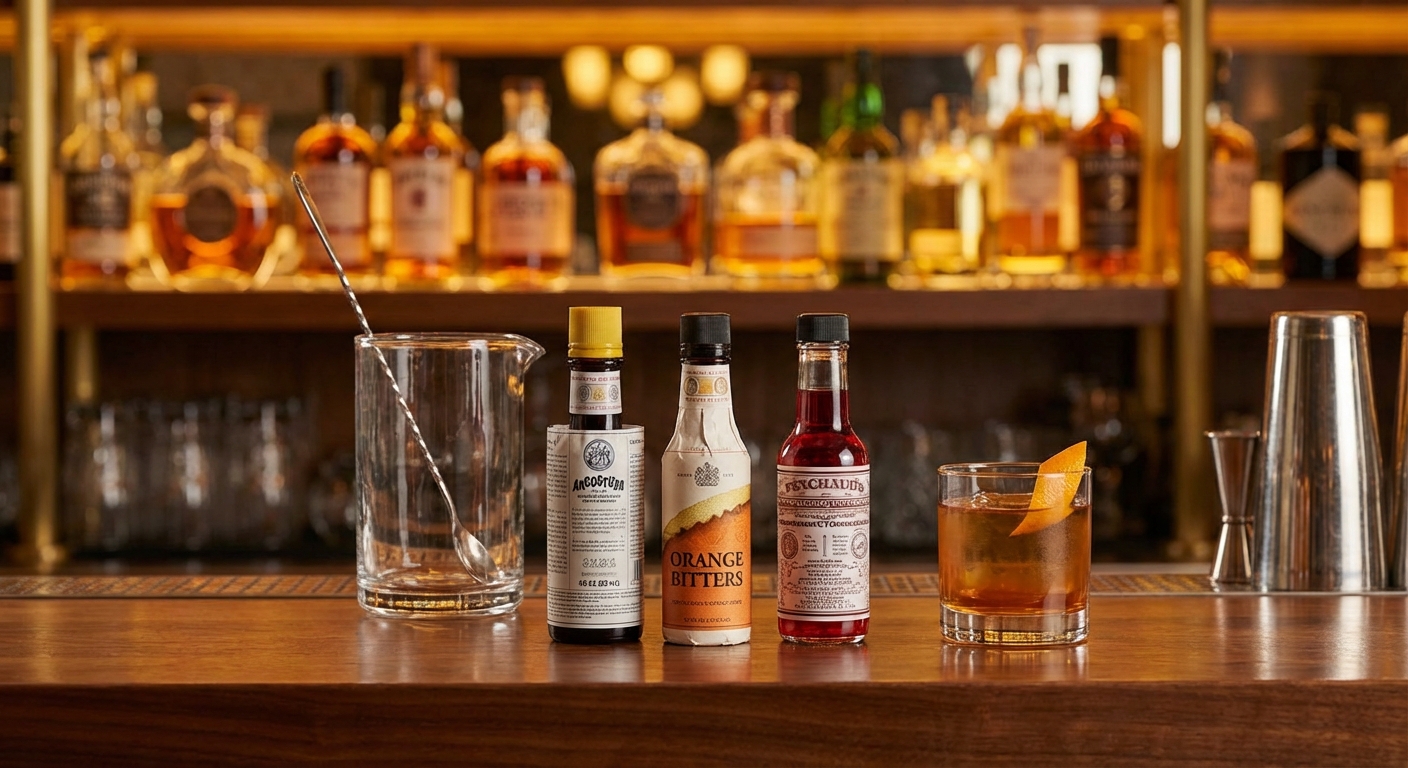
Three bottles anchor most serious home bars—Angostura aromatic bitters, orange bitters, and Peychaud’s. They overlap just enough to confuse beginners, yet differ enough that swapping one for another can change the whole drink. Here’s how to taste them, choose the best bottles, and substitute intelligently.
What Are Cocktail Bitters?
1. The role bitters play in a cocktail:
Cocktail bitters are high-proof botanical extracts made by infusing roots, barks, spices, peels, and herbs in alcohol. They’re used in tiny amounts—dashes, drops, or sprays—to add aroma, bitterness, and complexity without significantly changing a drink’s volume.
Think of bitters like seasoning: salt doesn’t make food “salty” when used correctly—it makes flavors pop. Similarly, bitters can sharpen a spirit’s edges, deepen mouthfeel, and bridge ingredients that otherwise feel separate.
2. How to taste and dose bitters:
To compare bitters, put 2–3 drops on a spoon, dilute with a little water, and smell before tasting. Your nose will pick up top notes (citrus, anise), while your palate registers mid-palate spice and drying bitterness on the finish.
- Start small: 1–2 dashes, then adjust—over-bittering can mute fruit and sugar.
- Use aroma strategically: express citrus peel and then add bitters to echo that aroma.
- Match intensity: assertive bitters (like Angostura) can overpower delicate drinks.
The History/Rise of Angostura, Orange Bitters, and Peychaud’s
1. From medicine to mixology:
Bitters began as medicinal tonics—bitter botanicals were thought to aid digestion and “strengthen” the system. As cocktails evolved in the 1800s, bitters became a defining element of the early American drink template: spirit + sugar + water + bitters.
2. Three classics, three legacies:
Angostura emerged from 19th-century tonic traditions and became the global workhorse for aromatic bitters—spice-driven, dark, and instantly recognizable. Peychaud’s, closely associated with New Orleans cocktail culture, became inseparable from the Sazerac and a certain anise-and-cherry perfume. Orange bitters rose alongside the Martini and other spirit-forward classics, bringing lift, peel oil brightness, and a refined bitter snap.
Angostura vs Orange vs Peychaud’s: Flavor Profiles (How They Actually Taste)
1. Angostura Aromatic Bitters:
Profile: baking spice (clove, cinnamon), dark herbal bitterness, hints of cola, dried citrus peel, and a warm, lingering finish. Angostura is the most “structural” of the three—less about a single aroma, more about building a deep backbone.
Best with: bourbon/rye, aged rum, brandy, and any drink needing spice-driven depth.
2. Orange Bitters (the citrus scalpel):
Profile: bitter orange peel, bright citrus oils, gentle spice, and a crisp, zesty finish. Orange bitters are about lift—they sharpen outlines, make spirits feel drier, and add a polished citrus nose without adding juice.
Best with: gin, vodka, blanco tequila, light rum, and fortified wines (vermouth, sherry).
3. Peychaud’s Bitters (New Orleans perfume):
Profile: anise/licorice, cherry-like fruitiness, floral-herbal notes, and a softer bitterness than Angostura. Peychaud’s can feel brighter and more aromatic—almost “candied” compared to Angostura’s dark spice.
Best with: rye, cognac, absinthe rinse cocktails, and anything that benefits from anise and lift.
Best Bottles to Buy (Top Picks by Style)
1. The essential, always-right picks:
If you want the most classic expressions, start here—these bottles cover the majority of cocktail recipes you’ll encounter.
| Bitters Type | Best Bottles | Why You’d Choose It |
| Aromatic |
|
Angostura is the benchmark: dark spice, universal compatibility, and the “correct” taste for many classics. |
| Orange |
|
Orange bitters vary widely: choose Regans’ for balance, Bitter Truth for intensity, Fee for a gentler orange-candy vibe. |
| Peychaud’s |
|
The signature for Sazeracs—anise + floral lift you won’t fully replicate with other bottles. |
2. Buying tips for a smarter bitters shelf:
- Prioritize versatility: start with Angostura + one good orange bitters, then add Peychaud’s for New Orleans classics.
- Mind sweetness: some orange bitters read sweeter—adjust syrup accordingly.
- Storage: keep capped tightly, away from heat/light; they’re stable, but aroma fades over years.
Best Substitutes (When You Don’t Have the Exact Bottle)
1. Subbing Angostura:
If a recipe calls for Angostura, you’re chasing warm spice + dark herbal bitterness. The closest approach is another aromatic bitters, then shape with citrus peel if needed.
- Best substitute: any quality aromatic bitters in equal dashes.
- In a pinch: use Peychaud’s but add an expressed orange peel to regain some depth and bite.
2. Subbing orange bitters:
Orange bitters are mostly about citrus oil aroma and drying bitterness. If you don’t have them, you can mimic the aroma with peel and restore bite with aromatic bitters.
- Best substitute: expressed orange peel + 1 dash Angostura (or another aromatic).
- Alternative: a tiny amount of curaçao/triple sec (adjust sweetness) plus a dash of aromatic bitters.
3. Subbing Peychaud’s:
Peychaud’s brings a distinctive anise-floral signature. To approximate it, combine aromatic bitters with a light anise note—carefully.
- Best substitute: aromatic bitters + a very light absinthe rinse (or a drop of pastis).
- Backup: orange bitters + aromatic bitters (50/50) for lift, though it won’t fully replace the anise character.
How to Use Each Bitters in Classic Cocktails (with Recipes)
1. Old Fashioned (Angostura-forward):
An Old Fashioned is where Angostura’s spice and bitterness act like a frame around whiskey’s sweetness and oak. Use quality ice and keep the dilution controlled.
| Step | Description |
| Ingredients |
|
| Preparation |
|
2. Martini (orange bitters as the finishing touch):
Orange bitters in a Martini can read like “high-definition vermouth”—it tightens the drink and brightens the botanicals in gin. Use restraint: too much turns it into a different cocktail.
| Step | Description |
| Ingredients |
|
| Preparation |
|
3. Sazerac (Peychaud’s as the signature):
A Sazerac is essentially a spirit-forward, New Orleans-style Old Fashioned—defined by Peychaud’s and an absinthe rinse. The result is aromatic, snappy, and historic.
| Step | Description |
| Ingredients |
|
| Preparation |
|
Quick Reference: Which Bitters Should You Reach For?
1. A simple decision guide:
When you’re unsure, think in terms of what the drink needs: depth, lift, or perfumed anise.
| If your cocktail needs… | Choose | Go-to drinks |
| Warm spice + backbone | Angostura |
Old Fashioned, Manhattan riffs, rum Old Fashioned |
| Citrus lift + dryness | Orange bitters |
Martini, gin cocktails, Champagne cocktails |
| Anise-floral signature | Peychaud’s |
Sazerac, Vieux Carré riffs, rye/cognac cocktails |
Bitters reward curiosity: the smallest adjustment can reveal a hidden note in your whiskey, make gin feel more botanical, or turn a familiar build into a house style. Stock Angostura for depth, a quality orange bitters for brightness, and Peychaud’s for that unmistakable New Orleans flair—then treat substitutes like seasoning, building the missing notes with peel, anise, or a careful extra dash.