
| Topic | Details |
| Key Highlights |
|
| Best For | Whisky enthusiasts, history lovers, and curious drinkers who want to understand why Japanese whisky tastes and feels so uniquely refined. |
| Quick Tip | When tasting Japanese whisky, compare a Yamazaki (often fruit-forward and polished) with a Yoichi (smokier, coastal) to experience how terroir, still design, and blending philosophy shape “craftsmanship.” |
Japanese whisky craftsmanship isn’t simply a copy of Scotch tradition—it’s a century-long conversation between imported technique and local sensibility. It began with apprenticeships, engineering notebooks, and a bold question: could whisky made in Japan rival the old-world benchmarks of Scotland?
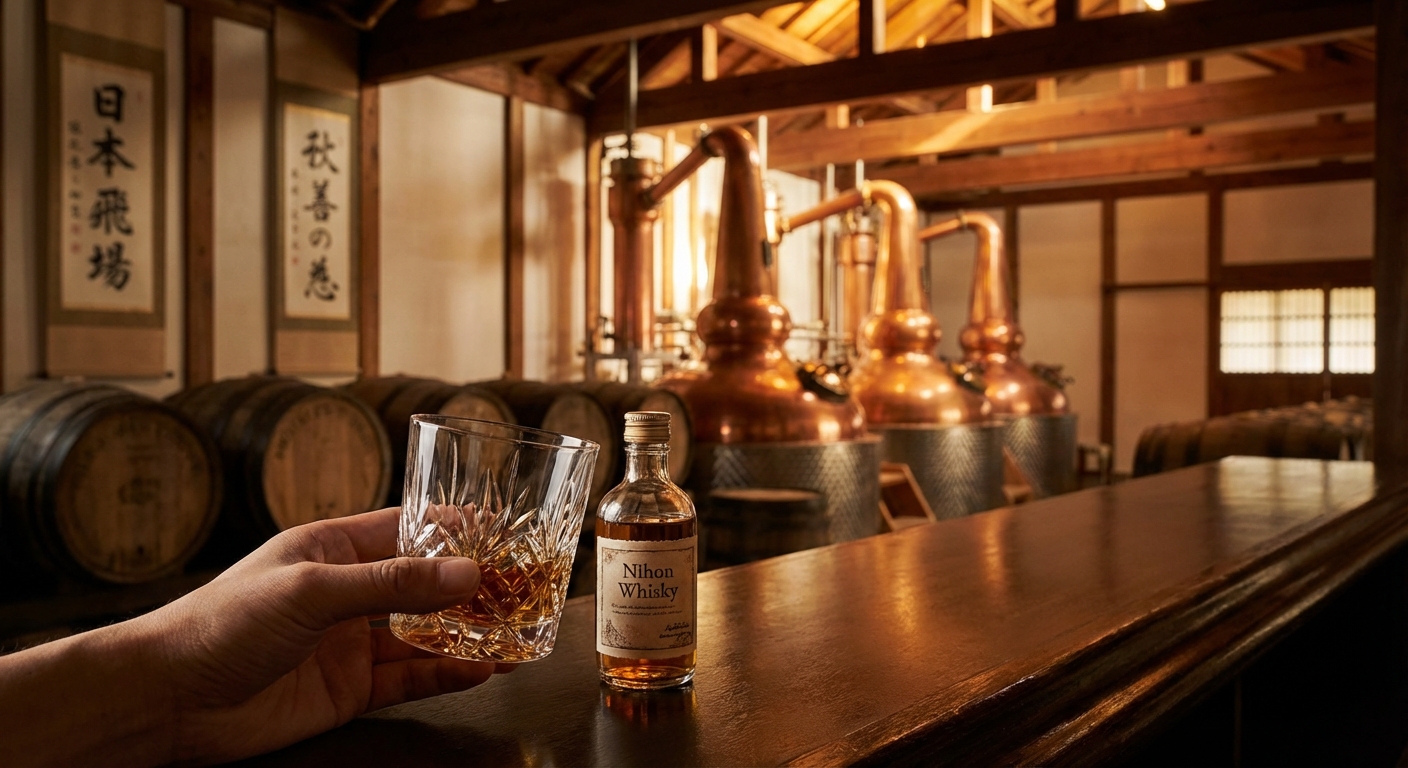
The answer, proven repeatedly on the world stage, lies in Japan’s meticulous approach to production: precise fermentation control, careful still design, obsessive cask management, and above all, blending as an art form. To understand why Japanese whisky became synonymous with elegance and detail, you have to trace the craft back to its pioneering figures, its postwar reinvention, and the modern era’s innovations—and controversies.
Origins: Japan’s First Steps Toward Whisky
1. Early influences and imported know-how:
In the late 19th and early 20th centuries, Western spirits flowed into Japan alongside industrial modernization. Beer and wine had already gained traction, and whisky—then a symbol of modernity and prestige—captured public imagination. Early “whisky-like” products existed, but they often relied on neutral spirits and flavorings rather than true malt distillation and long aging.
- Demand: an emerging middle class and cosmopolitan tastes created a market for brown spirits.
- Industry readiness: Japan’s growing expertise in chemistry and manufacturing set the stage for controlled fermentation and distillation.
- The missing piece: authentic whisky required deep knowledge of malting, pot still distillation, and maturation—skills not yet widespread domestically.
2. Masataka Taketsuru’s Scotland education:
The most consequential catalyst was Masataka Taketsuru, a Japanese chemist from a sake-brewing family who traveled to Scotland in 1918. He studied organic chemistry and apprenticed at Scotch distilleries, documenting production with near-scientific rigor. His notes—covering mash bills, yeast management, still shape, and maturation—became foundational texts for Japan’s whisky ambitions.
Taketsuru didn’t just bring back technique; he brought back a philosophy: whisky quality is built through disciplined process and patient aging. That mindset would become central to Japanese whisky craftsmanship.
The Founding Era: Yamazaki, Yoichi, and Two Visions of Craft
1. Shinjiro Torii and the birth of Yamazaki:
Shinjiro Torii, an entrepreneur with a sharp sense of Japanese consumer preference, envisioned a whisky that would suit local palates—balanced, harmonious, and approachable. In 1923, he founded Yamazaki Distillery near Kyoto, selecting the site for its exceptional water and humid climate, ideal for maturation.
- Site selection as craftsmanship: Yamazaki sits at the confluence of rivers, long famed for soft, high-quality water.
- Climate impact: Japan’s humidity can accelerate interactions between spirit and oak, influencing texture and aroma development.
- Style aim: elegance, layered fruit notes, and integration—qualities often associated with later Suntory releases.
2. Taketsuru’s departure and Nikka’s rugged northern path:
Taketsuru initially worked with Torii, but their philosophies diverged. Where Torii focused on a whisky tailored to Japan, Taketsuru sought a more Scotch-aligned, robust profile. In 1934, he founded what became Nikka, establishing Yoichi Distillery in Hokkaido—chosen for its cooler climate and coastal environment reminiscent of Scotland.
Yoichi became known for bold structure and, historically, more pronounced smoke. This contrast—Suntory’s polished harmony vs. Nikka’s assertive character—created a dynamic ecosystem that pushed Japanese whisky forward through creative tension.
Postwar Growth: Blending Culture and the Rise of the Highball
1. Domestic demand and a new drinking ritual:
After World War II, Japan rebuilt rapidly. Whisky, once a luxury, became a marker of aspiration and social life—especially in bars and corporate settings. The whisky highball (whisky with soda and ice) emerged as a refreshing, food-friendly staple that suited Japanese cuisine and drinking culture.
- Highball influence: encouraged distillers to craft whiskies that remain balanced when diluted and chilled.
- Consistency pressure: growing demand required reliable house styles year after year.
- Blending mastery: blenders became as important as distillers, refining the ability to create harmony across casks and spirit types.
2. The Japanese approach to variety within one company:
Unlike Scotland—where distilleries commonly trade casks—Japanese producers historically relied more on in-house diversity. To give blenders a wider palette without external sourcing, companies developed multiple yeast strains, fermentation regimes, and still shapes within the same distillery, plus a broad cask program.
This is a defining feature of Japanese whisky craftsmanship: building complexity not through broad inter-distillery exchange, but through controlled variation under one roof.
The Craft Toolbox: What Makes Japanese Whisky “Japanese”
1. Precision in fermentation and distillation:
Japanese distilleries often emphasize tight control over fermentation variables—temperature, yeast selection, and timing—to target specific aromatic outcomes. Distillation choices follow: still shapes, heating methods, and cut points are tuned to create spirits that will mature into the desired house style.
- Cleanliness and control: reduces off-notes and increases repeatability.
- Intentional new make: spirit character is planned with maturation in mind, not left to chance.
- Quiet complexity: many Japanese whiskies aim for layered aroma and texture rather than sheer intensity.
2. Mizunara oak and the art of patient maturation:
Mizunara oak became legendary for incense-like aromatics—sandalwood, temple incense, exotic spice—though it is notoriously difficult to work with. Its porous grain can increase leakage and demands careful cooperage and long aging. When successful, it contributes a signature that feels inseparable from Japanese whisky identity.
Japanese maturation also reflects climate realities: humidity and seasonal swings influence extraction and oxidation differently than in Scotland, shaping mouthfeel and aromatic lift.
Global Breakthrough: Awards, Scarcity, and Reputation
1. International recognition:
From the late 20th century into the 2000s, Japanese whisky began winning major accolades and high review scores. These milestones reframed Japan from “student of Scotch” to a peer—sometimes even a pacesetter. The craftsmanship narrative resonated globally: meticulous process, restrained elegance, and a blending culture capable of astonishing balance.
2. The boom-and-shortage era:
Global demand surged faster than aged inventory could support. Age-stated bottles became scarce, producers released more non-age-statement expressions, and prices climbed. For consumers, this era created both excitement and frustration—yet it also pushed distilleries to invest heavily in capacity, warehouses, and long-term stock planning.
- Craft under pressure: maintaining quality while meeting demand became a defining challenge.
- Innovation: new cask experiments and blending strategies expanded flavor options.
- Long-term mindset: whisky is time-dependent; today’s decisions won’t fully show up for a decade or more.
Modern Identity: Transparency, New Distilleries, and the Next Chapter
1. Labeling standards and trust:
As Japanese whisky’s reputation grew, so did scrutiny around labeling and sourcing. In response, the industry has moved toward clearer standards and definitions to protect consumer trust and preserve the meaning of “Japanese whisky.” This shift reinforces craftsmanship not only as production excellence, but as integrity—being precise about what’s in the bottle and where it was made.
2. A new wave of distillers:
Newer distilleries across Japan have emerged with fresh ideas: alternative grains, varied peat levels, novel wood management, and experimental fermentation. While inspired by the pioneers, many are crafting regionally expressive spirits that widen the category beyond the classic Suntory–Nikka axis.
What stays constant is the core principle: Japanese whisky craftsmanship is less about replicating a single tradition and more about refining every controllable variable—then blending and maturing with patience until harmony appears.
Summary
The history of Japanese whisky craftsmanship is a story of study, adaptation, and relentless refinement. From Taketsuru’s Scottish apprenticeships and Torii’s founding of Yamazaki to the postwar highball culture and today’s global acclaim, Japan built a whisky identity grounded in precision, balance, and blending artistry.
Its distinctiveness comes from deliberate choices: climate-aware maturation, diverse in-house production styles, careful cask strategy—including the mystique of Mizunara—and an emphasis on harmony that mirrors broader Japanese craft traditions. The result is a category that honors its roots while continuing to evolve, one carefully tuned batch at a time.